Machine series
HDPE Blow Molding Machine
HDPE is the most widely used material in extrusion blow molding.
Machines in this series
Not sure which series fits? Compare blow molding machines by container size and drive type.
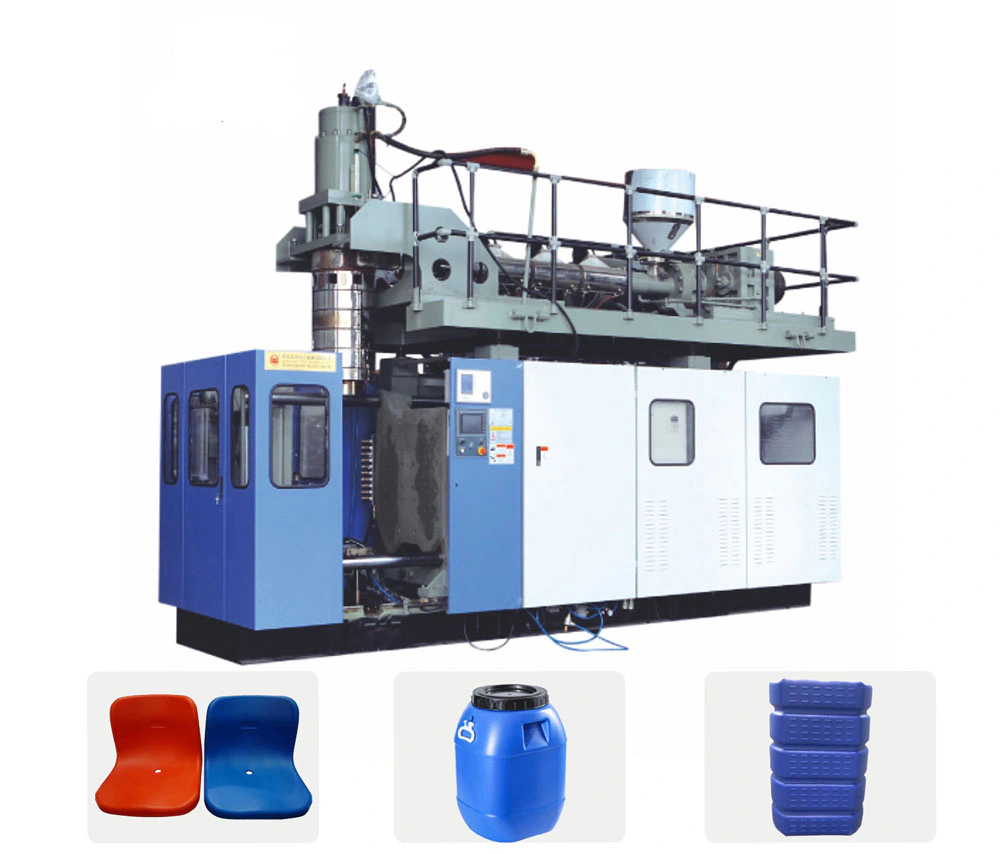
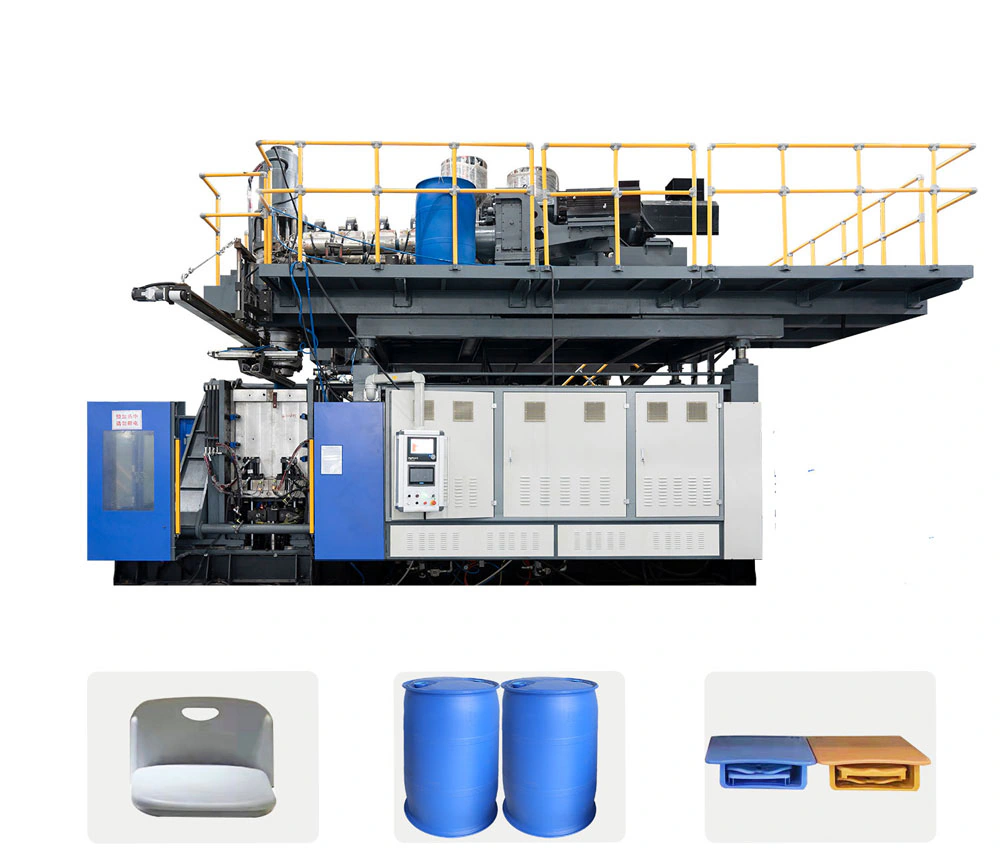
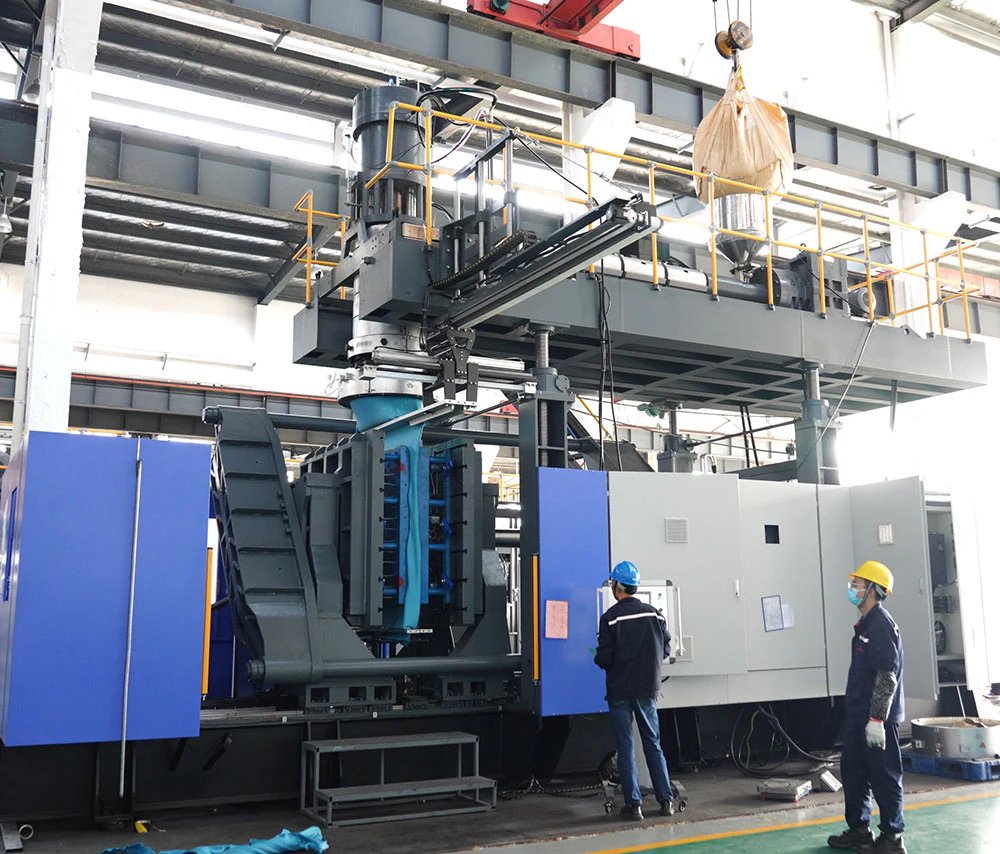
Why HDPE for blow molding?
HDPE (high-density polyethylene) has a high strength-to-density ratio, good chemical resistance and long service life, so it is the standard material for containers that must not leak or crack. It is the usual choice for jerry cans and chemical drums, and HDPE milk bottles are impact resistant, shatterproof, leakproof and recyclable. Compare HDPE with PP, PVC and PET in what is the best material for blow molding.
HDPE blow molding machines by container size
| Container | Typical HDPE products | Tongda models |
|---|---|---|
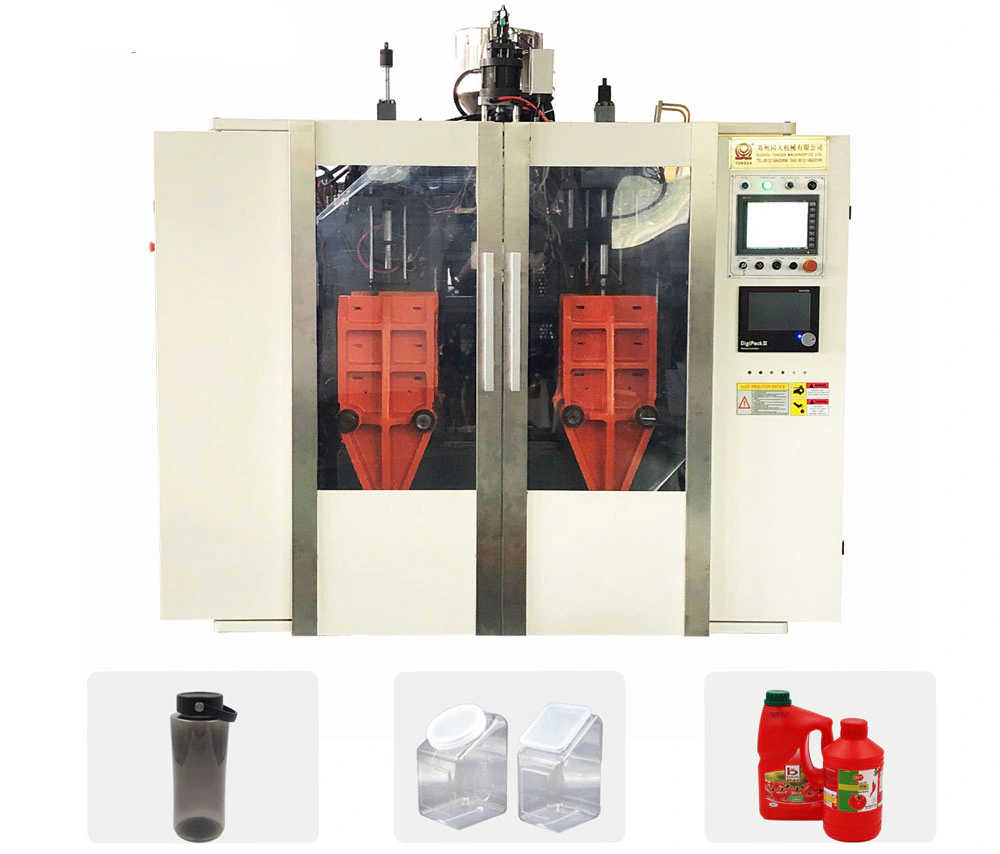
| Up to 5 L | Daily chemical bottles, milk bottles, motor oil bottles | HTS II-5L, HSE-5L |
| Bottles under 1 L | 6-head and 8-head bottles | HTS II-8L |
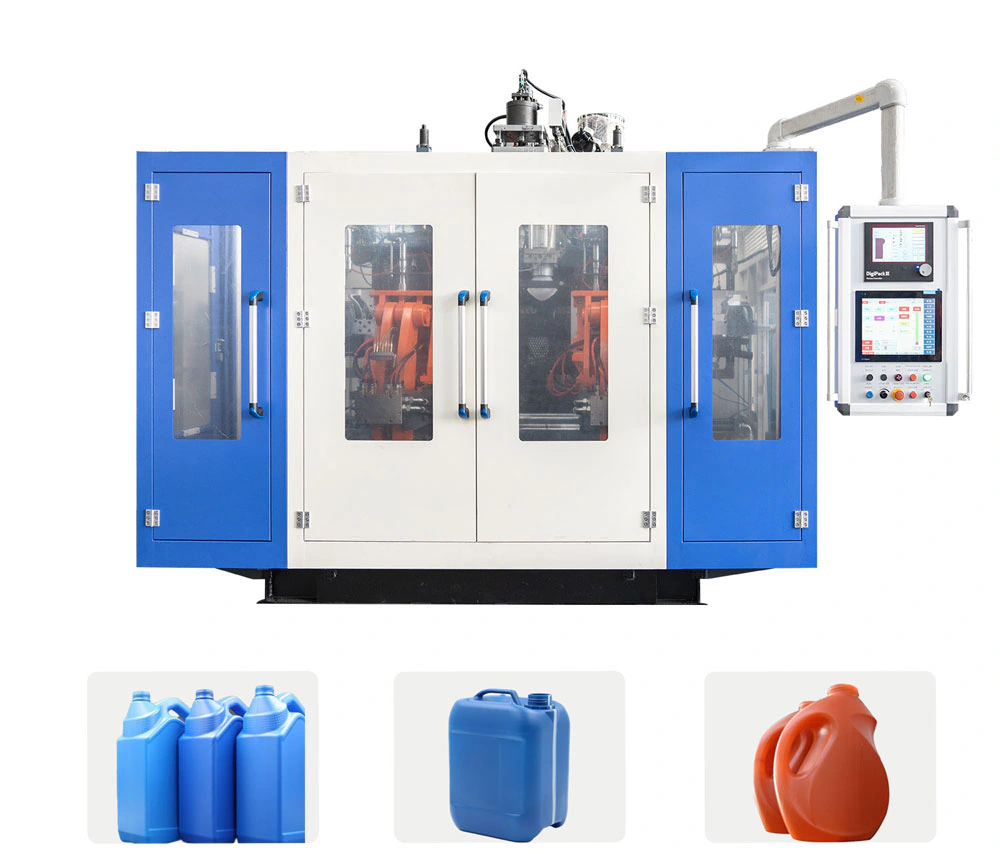
| 12 to 20 L | Jerry cans | HS II-12L, HSII-20L |
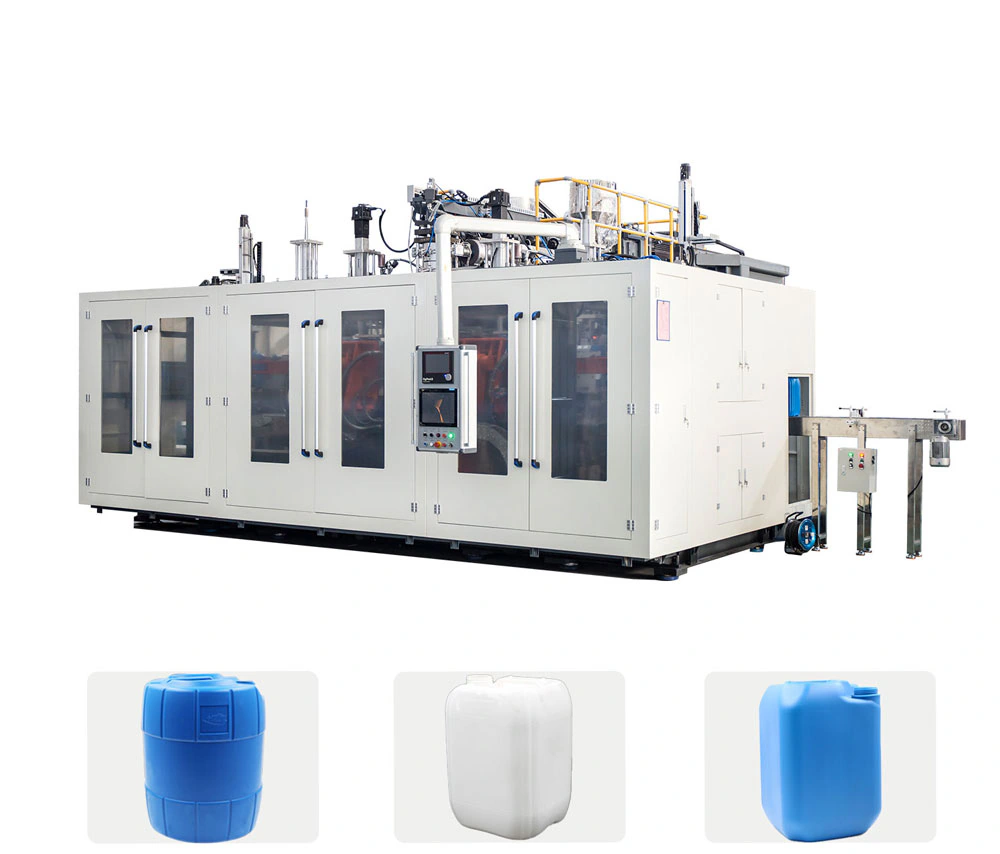
| 20 to 50 L | Chemical drums, stackable buckets | TDB-25F, HS II-30L, TDB-50F |
| 120 to 350 L | Open-top and closed drums | TDB-120F, TDB-250F/P, TDW-350F |
| 1,000 L and above | IBC tanks, water tanks | TDBX-1000A, TDBX-1500A |
How an HDPE machine is set up
- Screw and die head are matched to the HDPE grade and the container, so the melt is even and the parison does not sag.
- Parison wall thickness control puts material where the container needs strength, such as handles, corners and the base. Read how wall thickness control works.
- View strips and layers. For jerry cans and drums that need a visible fill level, machines can be fitted with a view strip, and single-layer or multilayer configurations are available for selected models.
- Drive type. Choose hydraulic, servo or fully electric according to container size, energy cost and cleanliness.
Regrind and recycled HDPE
Flash trimmed from your own containers can be ground and fed back into production; ask our engineers how much regrind your product can take. Post-consumer HDPE bottles are a different matter: after crushing and drying they cannot simply be blown again. See can HDPE bottles be blown directly after being crushed and dried.
For other materials and the full range, see all extrusion blow molding machines, or read blow molding machine price and options.
HDPE specifications from the model pages
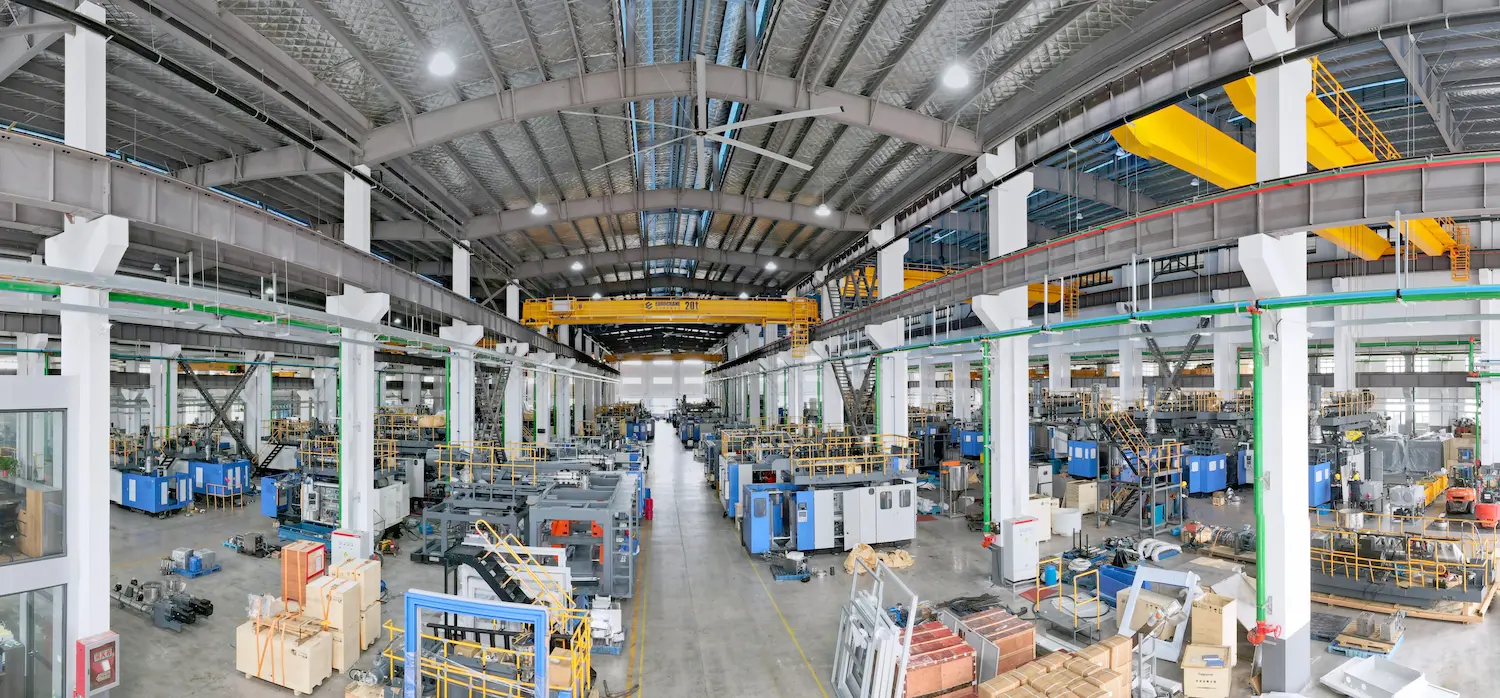
Suzhou Tongda Machinery has built extrusion blow molding machines since 1999. The published range runs from 10 mL bottles to the TDBS-3000A storage tank at 3,000 L. That 3,000 L machine is a storage tank, not an IBC. The company runs three plants of about 100,000 m², holds ISO 9001, ISO 14001 and ISO 45001, and has 90+ patents. About 400 people work there, including 50+ R&D engineers. Registered capital is 20 million yuan. More than 10,000 machines have gone to 100+ countries, at about 1,200 machines a year.
Parison wall-thickness control can cut material use by 20–30% versus an unprogrammed parison. Confirm the saving on your container. The table uses only the standard configuration published on each model page. HDPE kg/h is extruder output, not containers per hour. Clamping units are copied as published (kN or kn).
| Model | Max. volume | HDPE output | Clamping force | Screw diameter | Accumulator |
|---|---|---|---|---|---|
| HTSⅡ-5L | 5 L, double station | 110 kg/h | 110 kN | 80 mm | Not listed |
| HSE-5L | 5 L, single station | 85 kg/h | 158 kN | 70 mm | Not listed |
| HTS II-8L | 8 L, double station | 220 kg/h | 200 kN | 100 mm | Not listed |
| HSⅡ-12L | 12 L, double station | 160 kg/h | 220 kN | 100 mm | Not listed |
| HSII-20L | 15 L | 110 kg/h | 110 kn | 80 mm | Not listed |
| TDB-25A | 25 L, single station | 110 kg/h | 215 kN | 80 mm | 4 L |
| HSⅡ-30L | 30 L | 300 kg/h | 300 kn | 100 mm | Not listed |
| TDB-50A | 50 L, single station | 130 kg/h | 260 kN | 90 mm | 6.6 L |
| TDB-120A | 120 L, single station | 160 kg/h | 740 kN | 100 mm | 12.8 L |
| TDB-250F | 250 L | 360 kg/h | 740 kN | 120 mm | Not listed (continuous die on the model page) |
| TDW-350F | 350 L | 380 kg/h | 1,800 kn | 120 mm | Not listed |
| TDBX-1000A | 1,000 L | 420 kg/h | 1,200 kn | 135 mm | Not listed |
| TDB-1200A-P3 | 1,200 L, 3 layers | 720–750 kg/h | 1,500 kN | 120 + 90 × 2 mm | 50 L |
| TDBX-1500A | 1,500 L, single station | 450 kg/h | 1,200 kN | 135 mm | 35 L |
| TDBS-3000A | 3,000 L storage tank | 220 × 3 kg/h | 2,200 kN | 100 × 3 mm | 120 L |
The TDB-1200A-P3 page lists 750 kg/h for the published standard configuration. Tongda states TDB-1200 output as 720–750 kg/h. TDB-120A is the machine on the TDB-120F page. TDB-50A is the machine on the TDB-50F page. TDB-25A is the machine on the TDB-25F page.
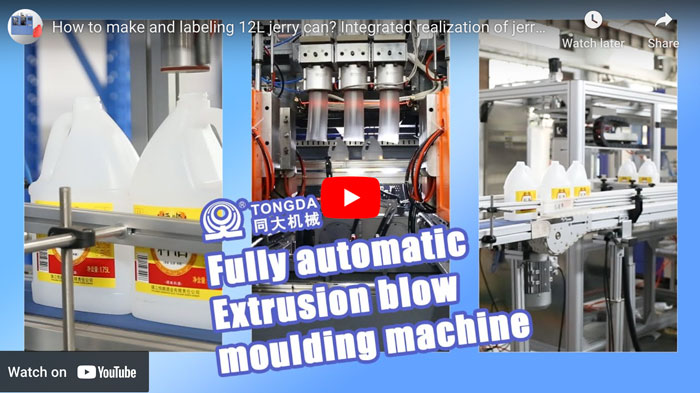
The same public Tongda video is used on the extrusion blow molding machine catalogue. Jerry-can and IBC clips are on the jerry can and IBC tank pages.
Send the container drawing and resin through the contact page.
Can one blow molding machine run both HDPE and PP?
Extrusion blow molding machines process both HDPE and PP. Tell us both materials when you request a quotation so the screw and die head are configured for them.
Which HDPE blow molding machine do I need for jerry cans?
Double station HTS II and HS II machines are the usual choice for 5 to 30 L jerry cans. See the jerry can blow molding machine page.
Can I see an HDPE production line running?
Yes. Customers are welcome to visit the Tongda factory in Zhangjiagang, Jiangsu, to see machines in production before ordering. The video on this page is a published Tongda line clip, and more are in the video library.
What container sizes do Tongda HDPE machines cover?
Model pages run from the HTSⅡ-5L at 5 L to the TDBS-3000A storage tank at 3,000 L. The 3,000 L machine is a storage tank. IBC inner bottles around 1,000–1,500 L are the TDBX-1000A, TDB-1200A-P3 and TDBX-1500A.
Is extruder output the same as bottles per hour?
No. The kg/h column is HDPE extrusion output from the model page. Accepted containers per hour depend on container weight, cavities and cooling. A dry-cycle number on a model page is not a production rate.
Can wall-thickness control reduce HDPE use?
Parison programming can cut material use by 20–30% versus an unprogrammed parison. The saving has to be confirmed on your container, resin and mold. It is a material figure, not an energy figure. How the model name differs from hourly output is explained in real output versus the model name.
How do I get an HDPE machine quotation?
Send the container drawing, resin grade and target weight through the contact page. Quote the model page you are comparing so the screw, die head and mold match that data sheet.
Can I use the published kg/h as accepted HDPE containers per hour?
No. The kg/h column is HDPE extruder output from each model page. The HTSⅡ-5L page lists 110 kg/h. The TDB-1200A-P3 page lists 720–750 kg/h, and Tongda states TDB-1200 output as 720–750 kg/h. The TDBS-3000A page lists 220 × 3 kg/h for a 3,000 L storage tank. That machine is a storage tank. Accepted containers per hour depend on weight, cavities and cooling. A dry-cycle number on a model page is not a production rate. Parison programming can cut material use by 20–30% versus an unprogrammed parison. Confirm that on your container. It is a material figure, not an energy figure. How the model name differs from hourly output is explained in real output versus the model name.
What spare parts and after-sales support come with an HDPE machine?
Tongda’s after-sales for this machine covers installation and commissioning, operator training, remote technical support, and on-site service when the project requires it. Spare parts are supplied for the quoted machine. Published company material describes 27 overseas and 14 domestic sales and service centres. The warranty runs for 14 months from the ex-factory date, the date the machine is shipped from the factory. It covers the whole machine and excludes damage caused by human factors, such as misuse or operator error. Most spare parts ship within 3 days. Special or custom parts are quoted case by case. Overseas spare-parts warehouses are in Mexico and Egypt, and more are being added. Online support is free and available 24 hours. An on-site engineer visit can be arranged. The machine interface can be set to English, French, Spanish, Arabic, German, Russian and other major languages. Customer engineers can train at the Tongda factory. When Tongda engineers carry out installation and commissioning, they also train on site. Training length depends on the customer’s needs and is typically 3–5 days. Read warranty, spare parts and after-sales.
Send the model through the contact page.
How do factory acceptance, site acceptance and payment milestones work?
A factory acceptance test uses a written plan to record the agreed container, the accepted output and the operating conditions before shipment. Site acceptance is separate. Plant utilities, installation and downstream equipment can differ from the factory trial, and any site test is defined in the project scope. For the machines the customer buys, factory acceptance covers machine inspection and confirmation, running-stability confirmation, mold confirmation and product confirmation. The length of a stable run is agreed case by case, so this page does not publish a fixed number of hours or cycles. Payment is 30% in advance and 70% before shipment. See FAT, SAT and payment and the all-electric acceptance checklist.
Start the request on the contact page.
What plant utilities does an HDPE line need?
Plan for the plant electrical supply (voltage and frequency), cooling water or a chiller, and compressed air for blowing and pneumatic movements. When the quotation includes them, a crusher, dryer and leak tester are sized with the machine. See ancillary equipment. Voltage and frequency are built to the customer’s plant power supply. Compressed air, chiller capacity and drying requirements, including any drying humidity, depend on the machine model. This page does not publish installed power, water flow, air volume or a humidity figure. See plant utilities for a blow molding line.
Send the plant supply with the container drawing through the contact page.
Will Tongda make the HDPE mold, or can I supply one?
Tongda can machine the blow mold to the container drawing and to the platen, opening stroke and blow pins of the selected machine. The mold is quoted separately from the machine. An existing mold can be reviewed after its envelope, mounting, head spacing, blow pins and utility connections are checked. Physical fit alone does not establish product quality or output, and a machining inspection does not replace a production trial on the agreed machine. The blow mold design guide lists what to record. A typical jerry-can or drum mold takes 50 working days. Mold prices are not published. See cost and lead time.
Ask for a Tongda mold or a review of your mold through the contact page.