 Eileen Yu, Vice General Manager
Originally published on WeChat:
English edition published: English edition updated: 4 min readProject news
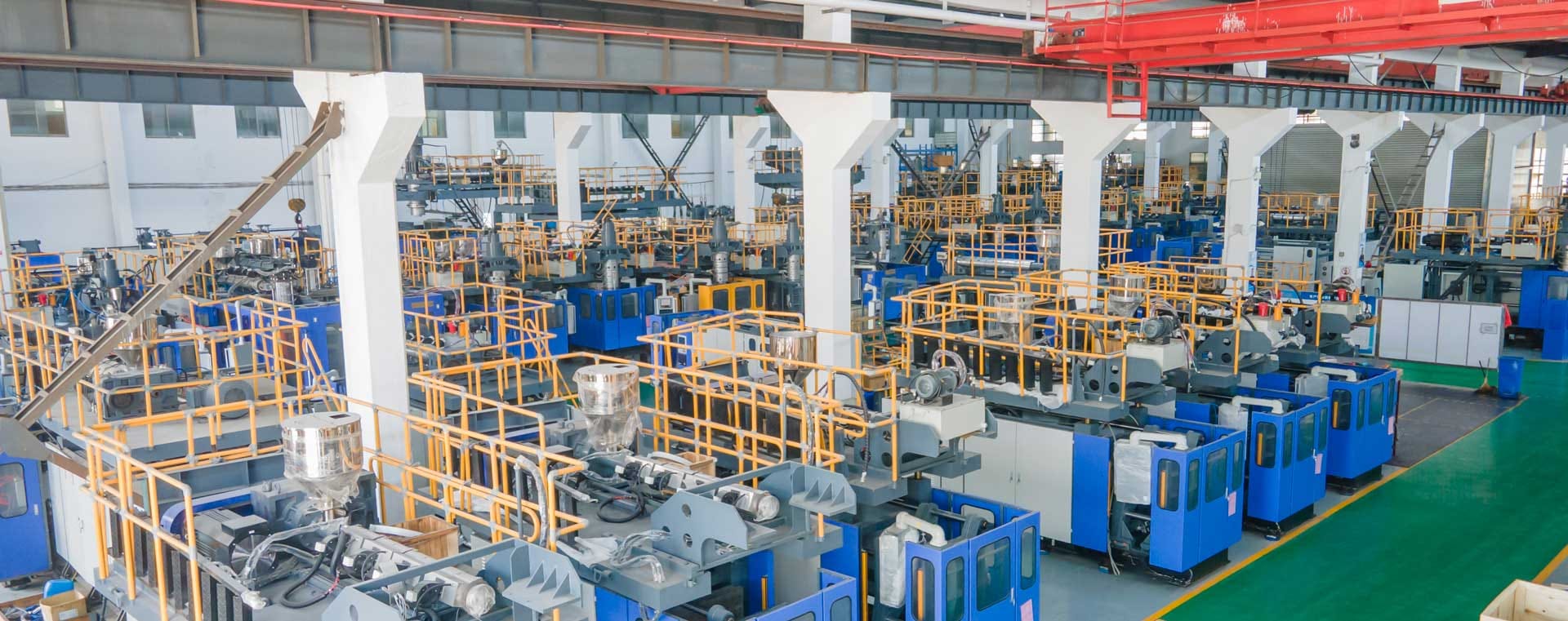
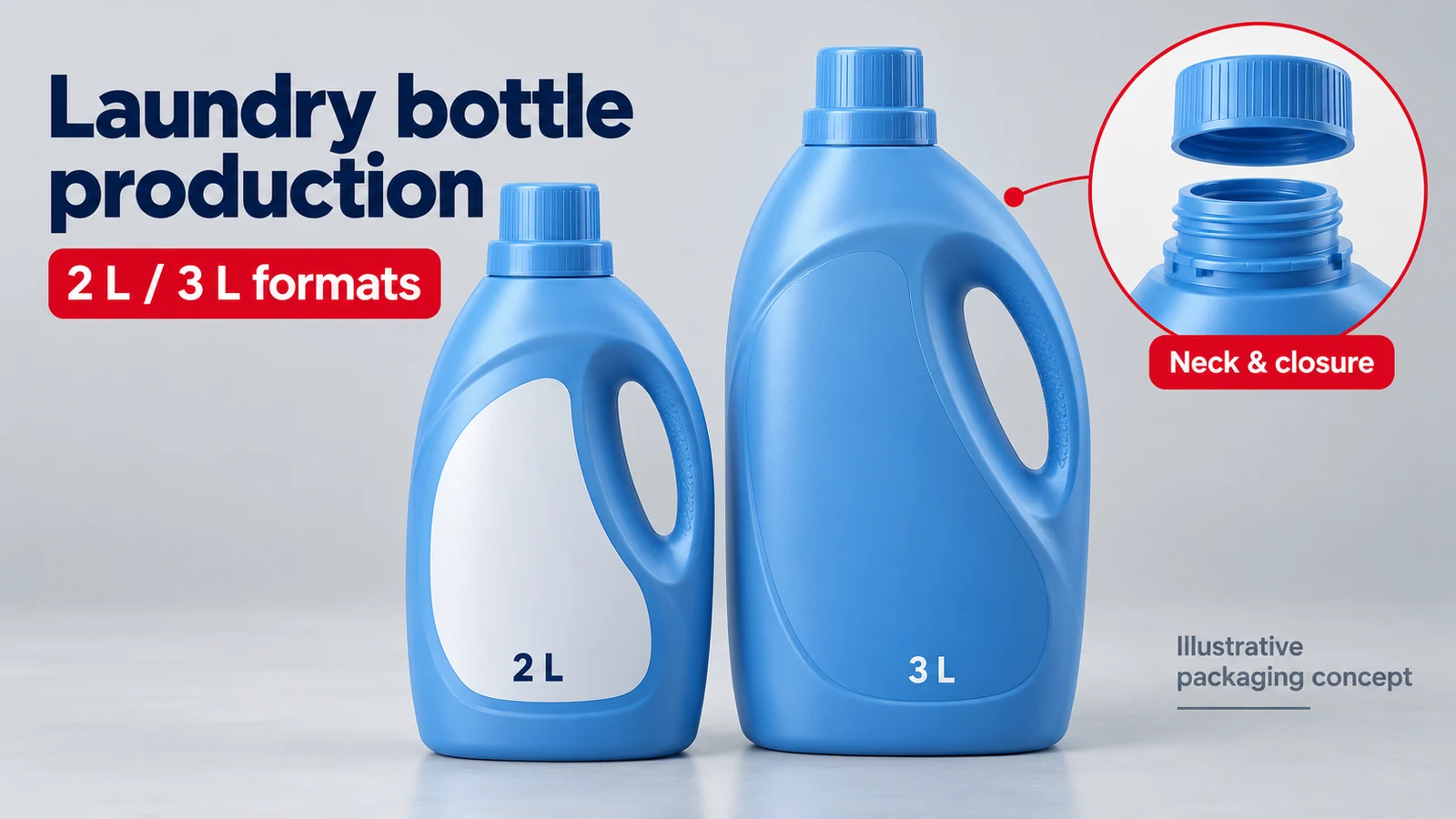
For a Russian laundry-detergent bottle project, Tongda configured an EH800A electro-hydraulic extrusion blow molding machine around 2 L and 3 L containers. The project combines two molding stations, three die heads, product-specific tooling and downstream inspection.
The useful lesson is how the bottle drawing, material, mold geometry and handling sequence determine the blow molding machine configuration. The project figures below describe this reported application; they should be checked against the agreed specification when preparing a new quotation.
Project configuration at a glance
| Item | Project specification |
|---|---|
| Product | 2 L and 3 L laundry-detergent bottles |
| Machine | EH800A electro-hydraulic hybrid extrusion blow molding machine |
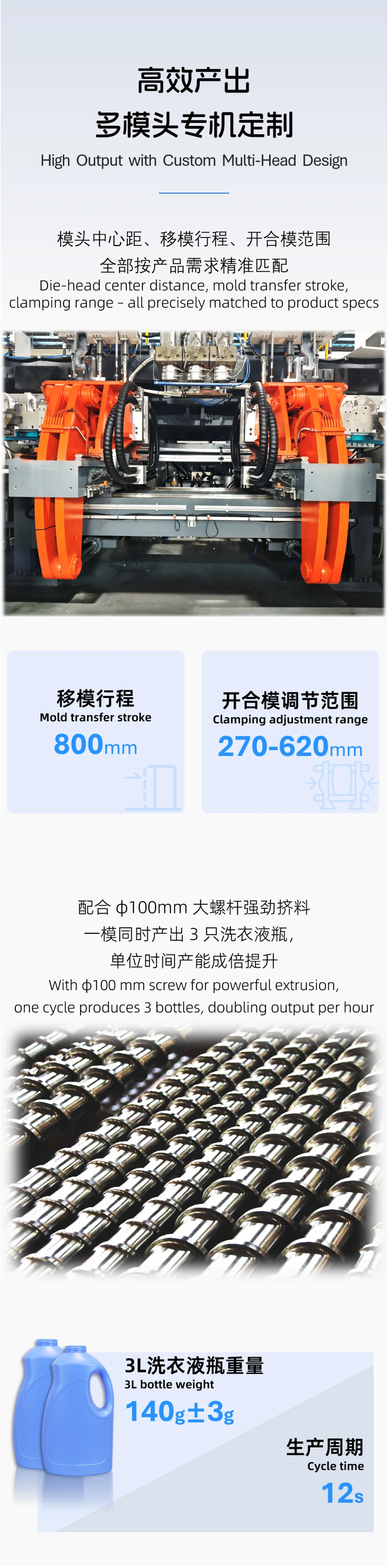
| Arrangement | Two molding stations and three die heads |
| Mold transfer stroke | 800 mm |
| Clamping adjustment range | 270–620 mm |
| Screw diameter | 100 mm |
| Clamping force | 220 kN |
| Reported 3 L bottle weight | 140 g ± 3 g |
| Reported cycle parameter | 12 seconds; cycle and station-counting boundary must be agreed |
The head spacing, mold transfer stroke and clamping range were selected around the bottle and tooling. These are important interfaces when a manufacturer wants to run several bottle designs on one line.
For related equipment, see the daily chemical bottle blow molding application. The separate 2 L and 3 L detergent-bottle machine selection guide discusses how to choose a configuration for a new project.
Why two stations and three heads need a clear output definition
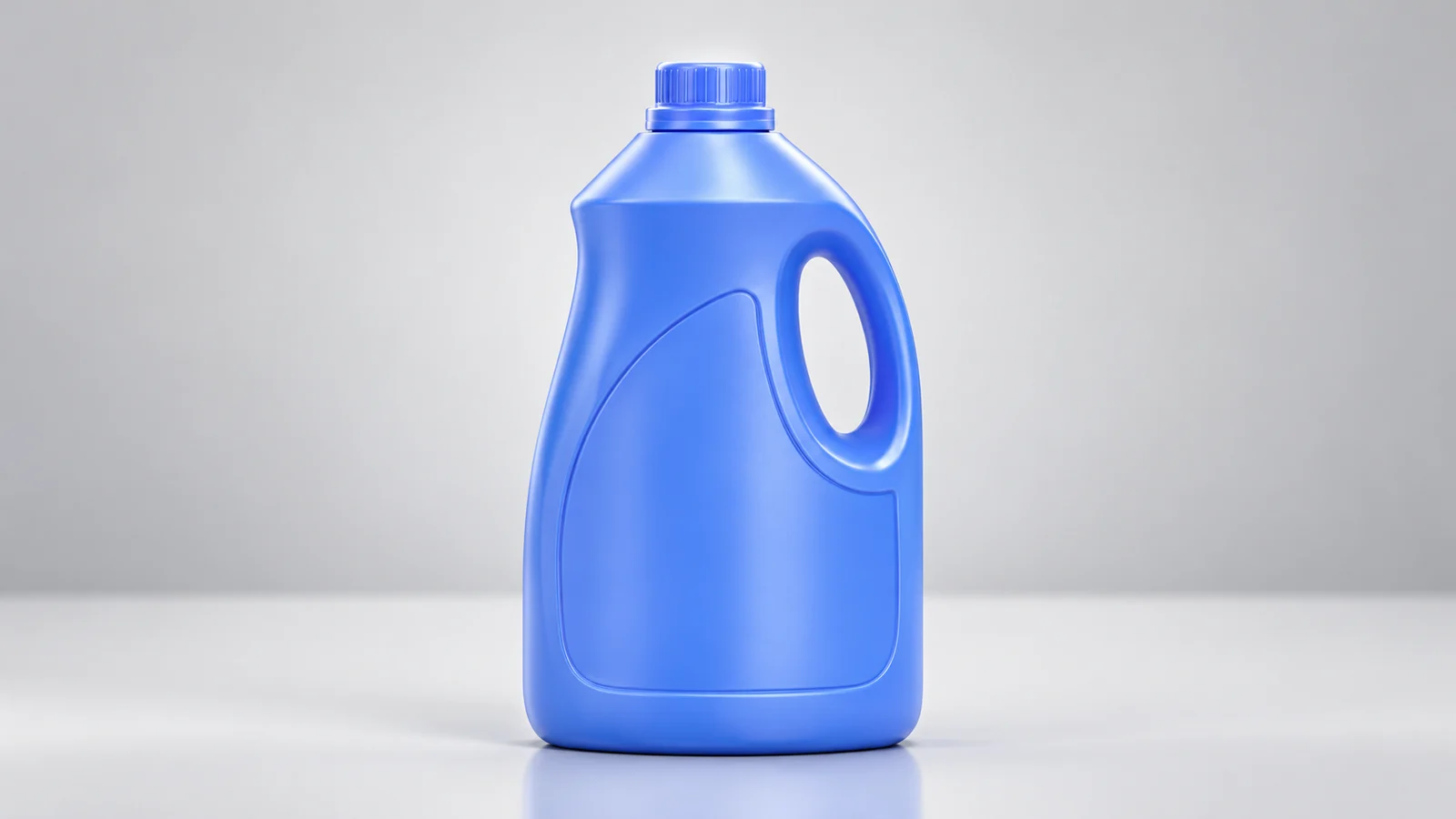
Head count and station count describe the machine arrangement. They do not independently establish how many accepted bottles leave the line each hour.
When discussing the reported 12-second cycle, confirm the start and end of that cycle, parts produced during it, whether station operations overlap, and whether downstream inspection can handle the output. Establish accepted output over a continuous run rather than multiplying every visible count together.
Bottle material, weight, cooling conditions and changeovers can alter the achievable rate. Record rejects and downtime so a capacity quotation refers to saleable bottles, not only machine motions.

Hybrid drive and parison control
The project account describes a Sumitomo servo-pump arrangement, Yuken hydraulic valves, a Mitsubishi PLC and Inovance control modules. Servo-controlled hydraulics supply pressure and flow according to the process demand. The actual electricity benefit depends on the comparison machine, operating conditions and equipment included in the measurement.
A MOOG parison controller programs die-gap changes during extrusion to influence material distribution. This helps tune the bottle’s critical regions. It is not direct measurement of every finished bottle wall; weight, section and leakage checks still verify the product. MOOG’s blow molding documentation explains this control technology.
The servo blow molding series overview provides context for comparing drive arrangements. This EH800A case should not be treated as a specification for the separate all-electric HSE series.
From part removal to inspected bottles
The reported line integrates material feeding, robotic take-out, cold-knife cutting, deflashing and transfer to weighing and leak inspection. Synchronizing those stages is necessary to keep the line balanced.
Agree what happens to an underweight, overweight or leaking bottle: how it is identified, diverted and counted. Also establish how flash and rejected material are handled within the approved material recipe. A recovery system does not establish the permitted recycled content of the finished container.
Bottle neck finish and closure fit deserve their own inspection criteria. Clean cutting and stable neck dimensions are relevant to filling, capping and leakage performance.
Controls and commissioning for the destination factory
The reported operator interface supports Chinese, English and Russian. Recipe naming, alarms and operating instructions should be included in the language review so operators can set up and troubleshoot the delivered line.
Before shipment, confirm electrical supply, compressed air, cooling water, floor space and access for mold changes. Commissioning should use the actual bottle tooling, material and inspection criteria. Any conformity documentation must match the delivered equipment and destination requirements.
Questions bottle producers ask
Can the same line make both 2 L and 3 L detergent bottles?
That is the application described in this case. For a new project, confirm mold envelope, head spacing, neck geometry, product weight and the changeover procedure for both bottles.
Does the 12-second figure guarantee a particular hourly output?
No. Confirm the cycle definition and complete-line part count, then measure accepted bottles over an agreed run. Cooling, material, downtime and inspection capacity all affect the result.
What information is needed before choosing a multi-head arrangement?
Provide dimensioned bottle drawings, neck and closure details, resin, target weight, required accepted output and the number of bottle designs to be produced.
Discuss your detergent-bottle project
Request a machine configuration for your bottle and production target. To compare another drive approach, read the all-electric personal-care bottle case and the ROI calculation guide.
The EH800A line in this case is an extrusion blow molding machine set up for 2 L and 3 L detergent bottles. The process and the main machine parts are explained on that page.
Source material: Tongda WeChat article 03. Source photographs and video stills retain the original equipment details. English concept illustrations are identified in their captions.