Published 4 min readTechnology
Selecting a pesticide bottle making line begins with the formulation and the complete package. An EVOH-containing multilayer wall can provide useful barrier performance, but the resin grade, layer distribution, bottle geometry and closure must be evaluated together. An all-electric drive or a stated layer count cannot, by itself, establish chemical compatibility or shelf life.
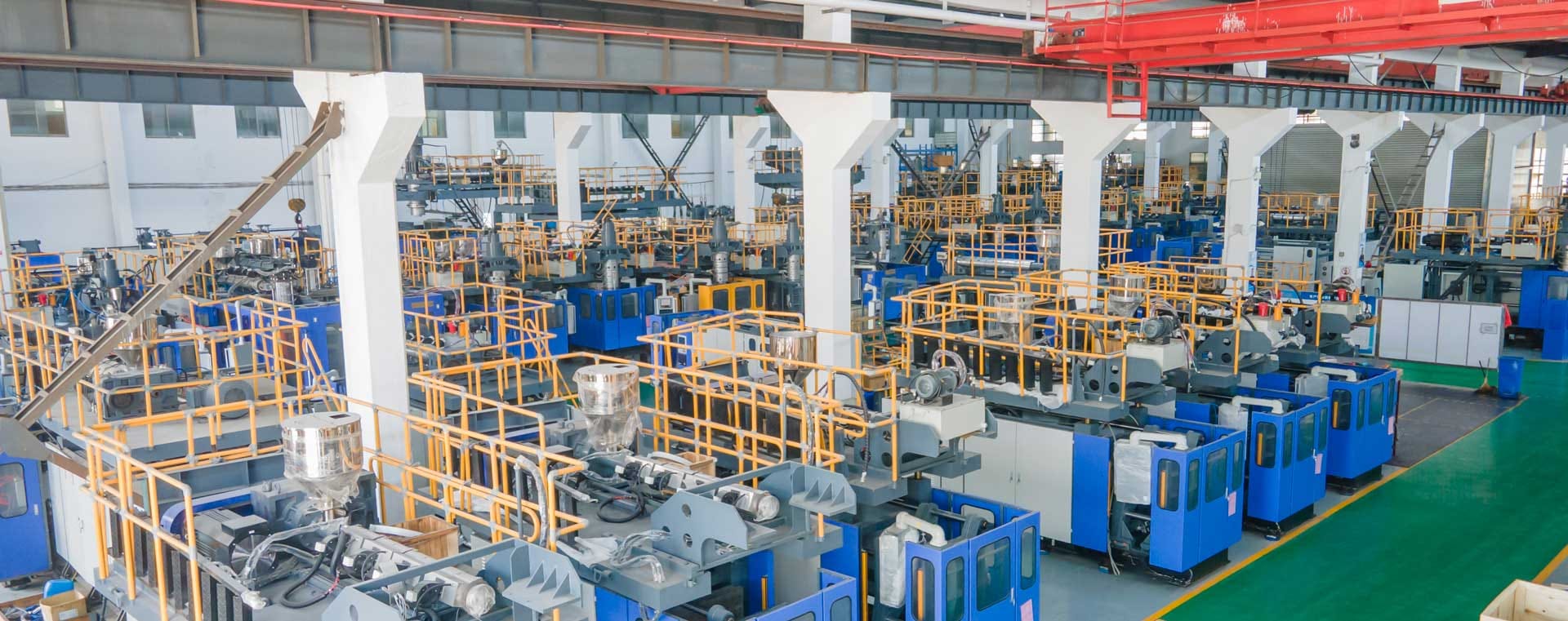
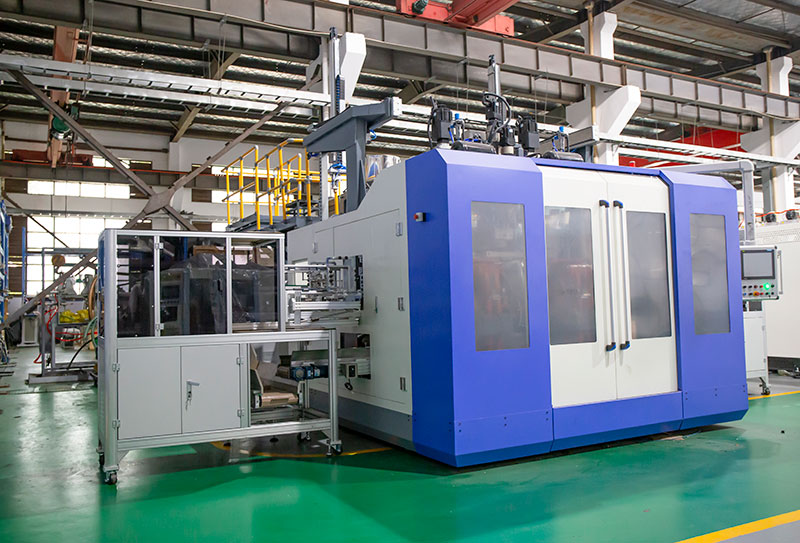
Tongda’s Jordan project uses an HSEII-5L platform to illustrate how barrier-bottle production can combine material feeds, forming and downstream inspection. The configuration is a project example, rather than a specification for every agrochemical container.
Define the package before selecting the machine
Give the equipment and material suppliers the intended formulation, fill volume, closure and storage conditions. Include handling loads, the required shelf-life assessment and any decoration or labeling needs. A container that is suitable for one product may need a different structure for another formulation.
Distinguish three possible issues: material compatibility, transmission through the wall, and leakage at the closure. They are related package risks, but they require different investigations. A visually sound wall does not rule out permeation; a barrier resin cannot repair an inadequate cap seal.
| Selection input | Why it matters |
|---|---|
| Formulation and exposure | Establishes the compatibility and barrier test conditions |
| Bottle and closure | Defines geometry, sealing and filled-package requirements |
| Material structure | Determines resin supplies, bonding and layer controls |
| Accepted output | Sets the line and inspection capacity to be demonstrated |
Build the wall around a defined barrier requirement
HDPE, EVOH and compatible tie resins can be co-extruded into a multilayer parison. Each material has a job: structural surfaces, bonding or barrier. A regrind-containing layer, where permitted, is a separate design choice and should not be mistaken for an EVOH barrier.
Kuraray describes EVOH applications in chemical and agricultural packaging. That material capability still needs to be matched to the actual formulation, grade and package construction. Use supplier guidance and filled-package testing to select the structure rather than assuming one stack works for every pesticide.

Read the HSEII-5L project configuration carefully
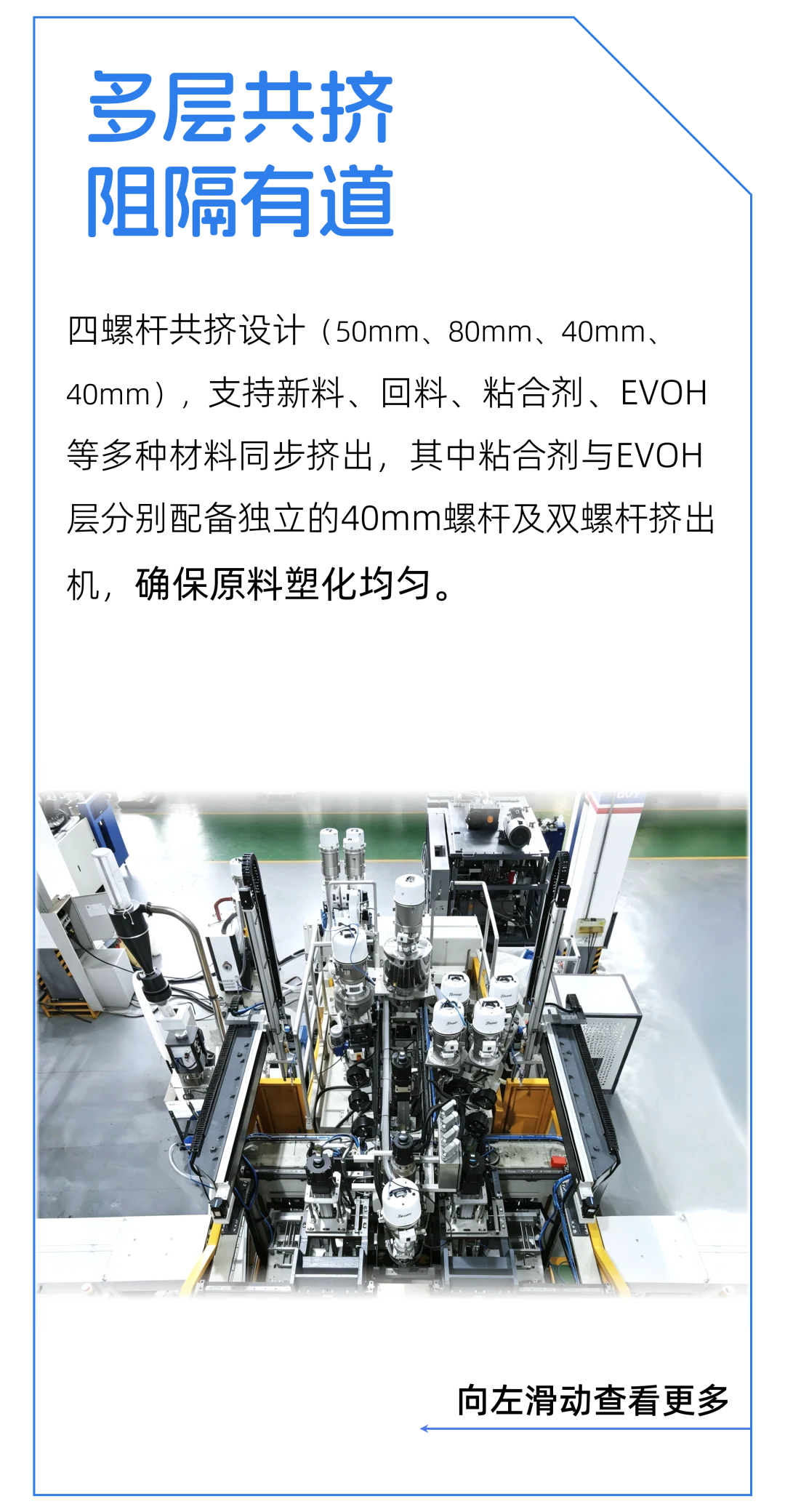
The Jordan project description lists four extrusion units with nominal screw diameters of 50, 80, 40 and 40 mm. These are reported configuration details. The material assignment and any twin-screw arrangement need to be confirmed on the actual configuration drawing.
Four extrusion units do not necessarily mean four wall layers. A die head may distribute one stream into more than one layer. Request the material-flow diagram, the controllable output range of each feed, and the method for checking layer continuity after molding.
The project also describes center clamping and a 100-point parison program. Point count describes a control function; it does not specify a finished bottle’s minimum wall or guarantee a particular material saving. Establish those results through the agreed trial with the intended bottle and resin.
Specify what the integrated line includes
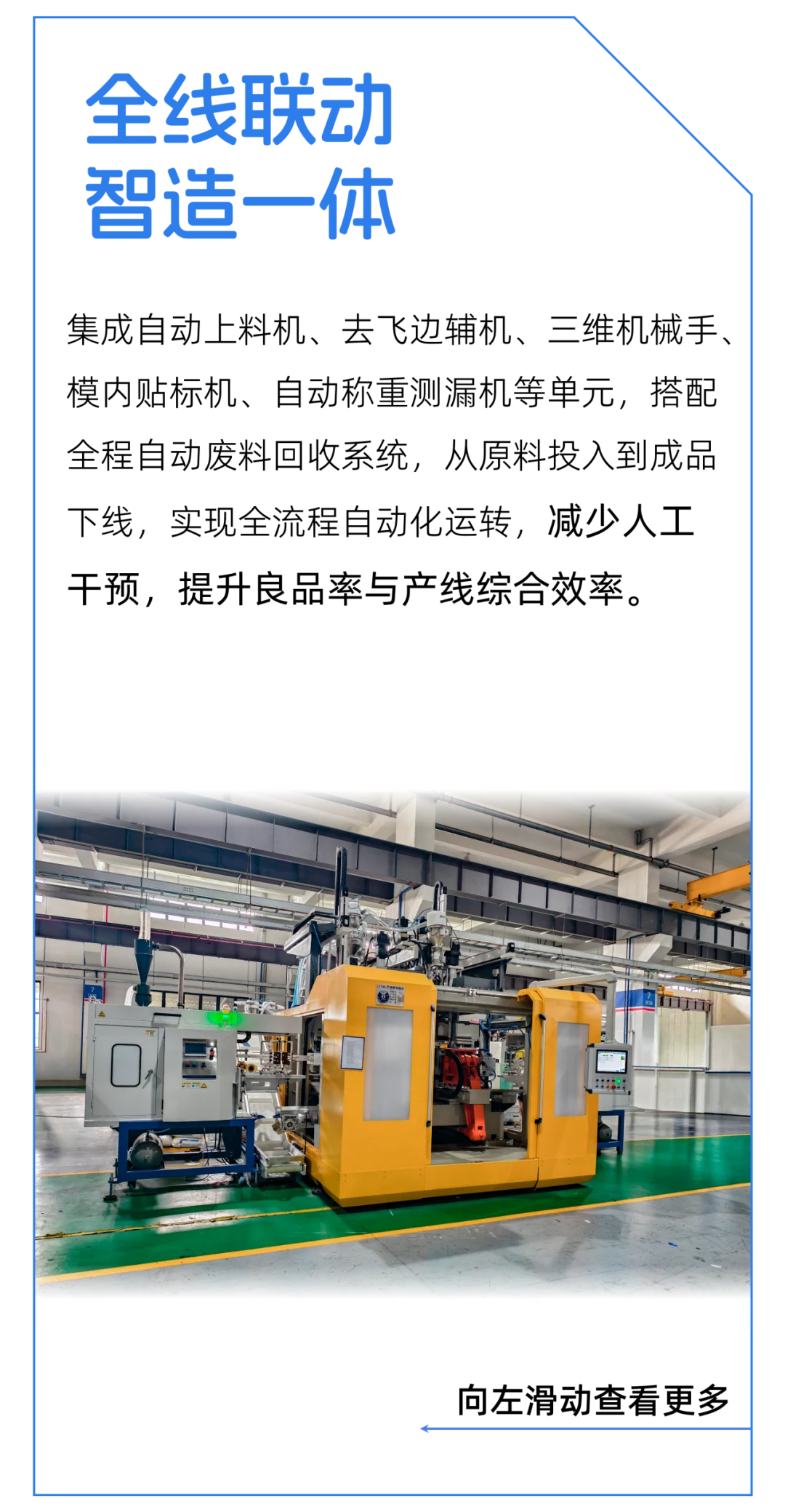
Possible project equipment includes loading, part take-out, deflashing, in-mold labeling, weighing, leak testing and scrap handling. State which units are supplied and which interfaces remain the buyer’s responsibility. A quotation for a molding machine should not be assumed to include the entire downstream line.
Balance inspection and conveying capacity with accepted bottle output. Define how a rejected bottle is identified and separated, how inspection results are recorded, and what happens when a downstream unit stops. Confirm that recipes and alarms cover the integrated operation, not only individual machine motions.
Qualify the bottle after filling
Inspect net weight, wall and layer sections, neck finish and closure fit during the molding trial. Then assess the filled package under the agreed temperature, duration and handling conditions. Use the actual contents or a justified test medium agreed with the appropriate specialists.
Record package changes after exposure as well as visible leaks. Define acceptance limits and sampling before tests begin. A machine demonstration cannot establish suitability for every destination market; product and packaging requirements belong to the actual supplied formulation and application.
Surface fluorination is a different engineered barrier route discussed in the original project material. Evaluate it separately with the relevant process specialists. It should not be treated as interchangeable with EVOH co-extrusion or as an automatic route to market approval.
Questions buyers ask
Does all-electric drive make a pesticide bottle a high-barrier package?
No. Drive architecture concerns machine motion. Barrier performance comes from the selected materials, their distribution, the package design and demonstrated performance under the intended conditions.
How is this guide different from the six-layer guide?
This article focuses on the pesticide bottle, closure and integrated HSEII-5L project. The six-layer co-extrusion guide explains stream allocation and layer verification in more detail, including a larger-container example.
Which machine information should I request first?
Review the HSEII-5L model and the relevant chemical bottle applications. Then send the package requirements so Tongda can propose the resin feeds, die, mold and acceptance scope for the actual product.
Source material: Tongda WeChat article 06. Source photographs and video stills retain the original equipment details. English concept illustrations are identified in their captions.