Published 4 min readProject news
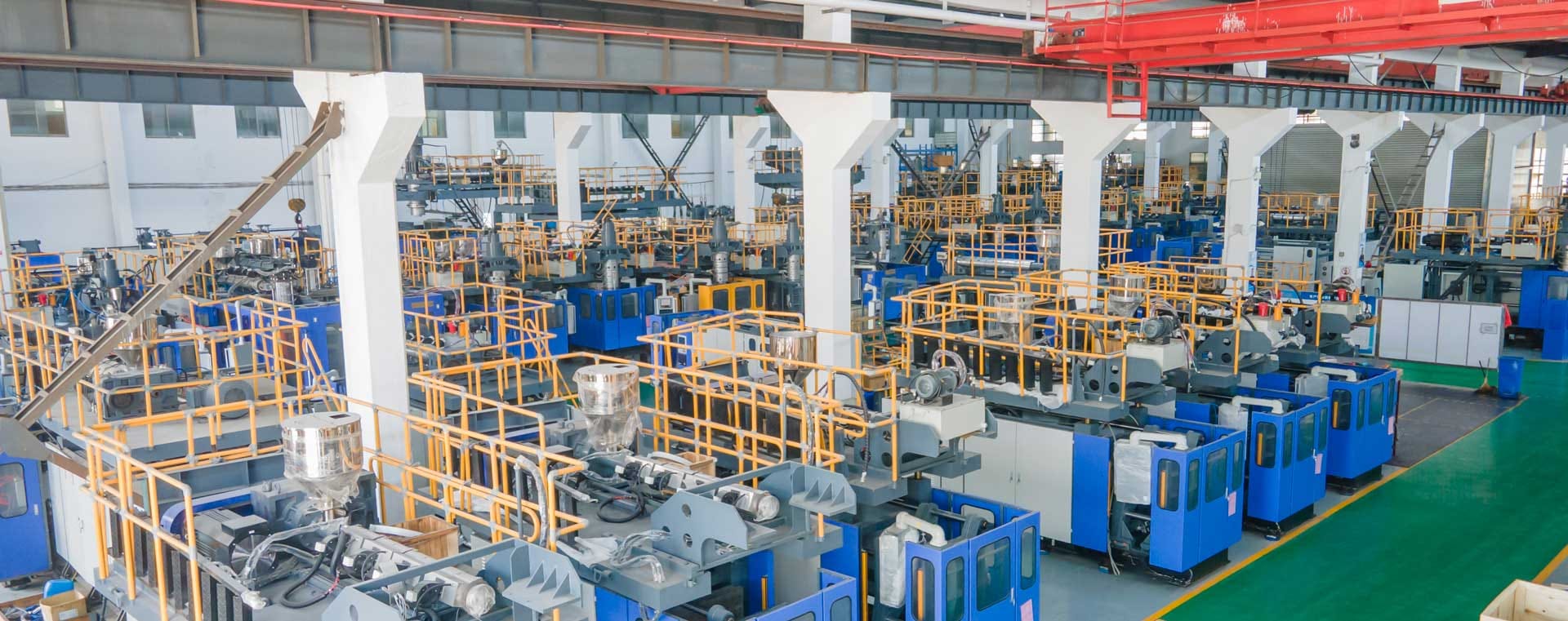
Tongda’s HSEII-12L/8 application describes an all-electric, double-station line for 600 mL and 700 mL personal-care powder bottles. The project focuses on repeatable bottle weight, coordinated multi-cavity production, inspection and production-data visibility.
The following figures come from Tongda’s project material. They describe this application, rather than guaranteed performance for every bottle or material processed on an HSE-series machine. The customer is not named here.

The reported application
| Item | Project account |
|---|---|
| Machine | HSEII-12L/8 all-electric extrusion blow molding configuration |
| Arrangement | Double station, eight-cavity configuration as described in the source |
| Products | 600 mL and 700 mL personal-care powder bottles |
| Reported 600 mL bottle weight | 36 g ± 2 g |
| Reported 700 mL bottle weight | 44 g ± 2 g |
| Reported complete-line count | 16 bottles in 16 seconds |
| Control priorities | Weight repeatability, coordinated motion, recipes, alarms and production records |
The source describes an eight-cavity arrangement and a total count across the line. A machine proposal should define cavity, station and cycle counting explicitly. The model designation does not mean the case bottles have a 12 L volume.
Explore the fully electric blow molding series and the daily chemical bottle application for related equipment requirements.
What the output calculation actually shows
Using the reported complete-line count:
Theoretical hourly output = 16 bottles ÷ 16 seconds × 3,600 = 3,600 bottles/hour.
This is a theoretical rate for that counting boundary. At uninterrupted operation for 24 hours, it corresponds to 86,400 bottles. Actual accepted production is lower when time losses and rejected bottles are present.
For capacity planning, use the actual operating schedule and accepted count. If a measured accepted-output figure already excludes rejects or stoppages, do not deduct the same loss again.
Weight repeatability and resin consumption are different measures
A reported 36 g ± 2 g range describes variation around a target or measured value; the sampling method and interpretation of the tolerance need to be defined. It does not mean that each bottle uses 2 g less resin.
Similarly, narrowing a distribution from 36 g ± 3 g to 36 g ± 2 g does not by itself reduce the mean from 36 g. Better repeatability may create room to adjust a target weight, but any reduction must preserve the agreed bottle performance and be demonstrated by measurement.
Track average net weight, variation, rejects and material consumption separately. The all-electric ROI guide shows how those measurements enter a cost calculation.
All-electric motion and cleanliness objectives
All-electric actuation removes the hydraulic-drive oil circuit associated with those specified motions. That can reduce a contamination pathway and changes the maintenance tasks for the drive system.
Mechanical lubrication, gearboxes, bearings, auxiliaries and bottle handling still need to be assessed. All-electric drive alone does not establish an entirely oil-free production environment or qualify a line for food, pharmaceutical or medical packaging.
For personal-care bottles, include the material-contact path, flash handling, bottle discharge and inspection area in the cleanliness review.
Turn production data into an acceptance record
The project account describes recipe management, operating alarms, production-data collection and remote maintenance functions. Specify the functions included in the offered line and test them during acceptance.
A useful production record connects the bottle design, mold, material lot and recipe to accepted quantity, weight samples, reject reasons, stops and utility measurements. That record supports troubleshooting and repeat orders more directly than an isolated peak-speed figure.
Remote access also needs agreed responsibilities: who can connect, what they may change, and how configuration backups and change records are kept.
What to verify during a bottle trial
- Define how each station, cavity and complete-line cycle is counted.
- Run the specified bottle, resin and tooling under agreed utility conditions.
- Inspect weight distribution, critical dimensions, neck finish and leakage or other required bottle tests.
- Record accepted bottles and rejects over a continuous production period.
- Meter energy with a defined machine-and-auxiliary boundary.
- Test recipe recall, alarms, backups and downstream inspection handling.
Questions personal-care bottle producers ask
Is 3,600 bottles/hour the guaranteed output of every HSEII-12L/8?
No. It is the theoretical rate calculated from this reported project’s 16-bottle, 16-second count. A quotation needs bottle-specific conditions and an agreed accepted-output test.
Does tighter bottle-weight tolerance prove resin savings?
No. Resin savings require a measured reduction in average material consumption while the product still meets its requirements. Weight variation and average weight must be reported separately.
Can this case be used to compare hybrid and all-electric drives?
It identifies useful comparison measures, but a fair test requires equivalent products, tooling, accepted output and utility boundaries. The EH800A detergent-bottle case describes a separate hybrid-drive application.
Discuss your personal-care bottle project
Send the bottle drawing, resin, target weight, required output and cleanliness requirements. Request an all-electric line proposal to agree the machine configuration and acceptance plan together.