Published 4 min readTechnology
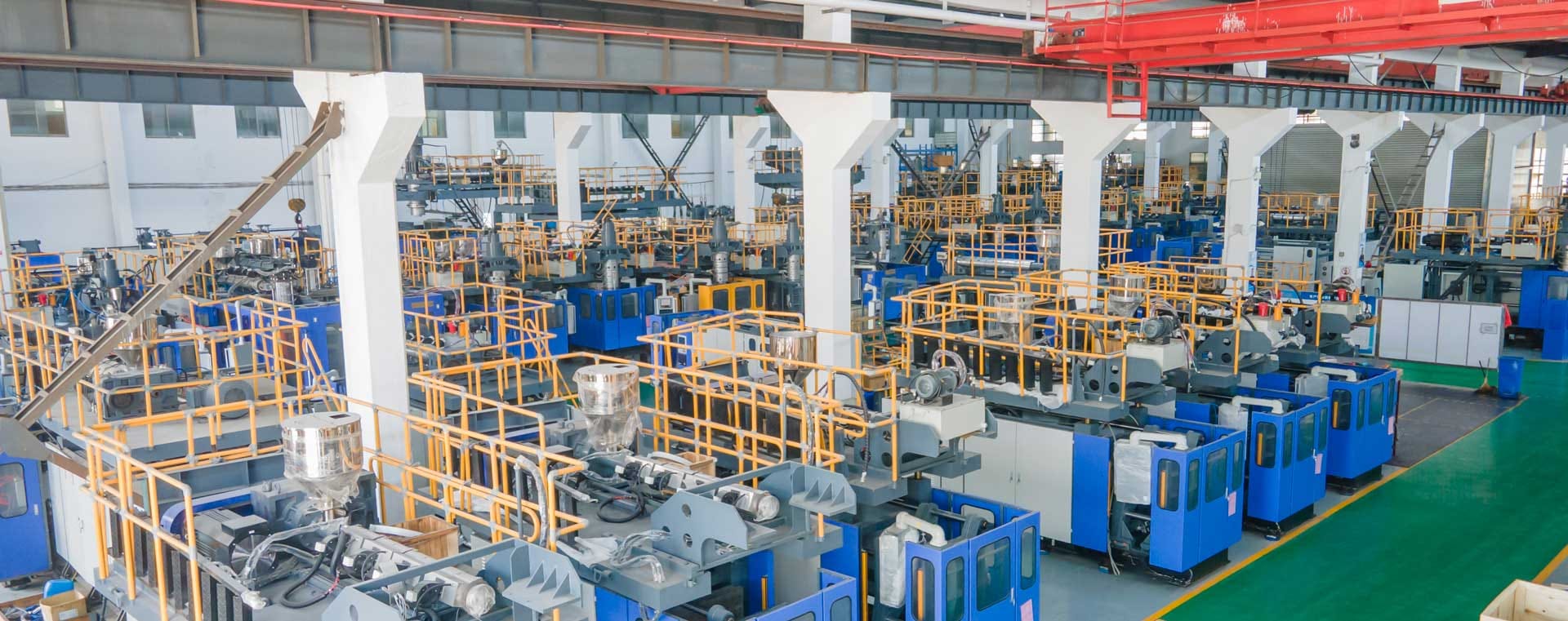
A modular HTS continuous-extrusion blow molding line should be configured around a defined bottle and production requirement. Head layout, mold, blow-pin orientation, trimming and downstream handling need to work together. A platform’s range of options does not mean one installed machine can make every bottle without changes.
Tongda’s HTS material describes applications from small bottles to larger containers, with different head and layer arrangements across the family. For buyers, the useful task is translating that flexibility into the exact configuration, changeover procedure and acceptance trial for the proposed products.
Define the product family and the limiting bottle
Start with drawings and samples for each intended product. Identify nominal volume, dimensions, neck angle, handle, resin, net weight, decoration and inspection requirements. Include the expected production mix rather than presenting only the easiest bottle.
The original platform description mentions 10 mL to 20 L applications, one to eight cavities and one to four layers. These are family-level options. Confirm the narrower limits of the selected model, die, mold and material combination; the ranges do not establish that every option can be combined.
If a line will make several bottles, identify the products that limit mold size, extrusion capacity, head spacing, handling or cycle time. This helps distinguish a practical product family from a list of products that would require substantial re-engineering.
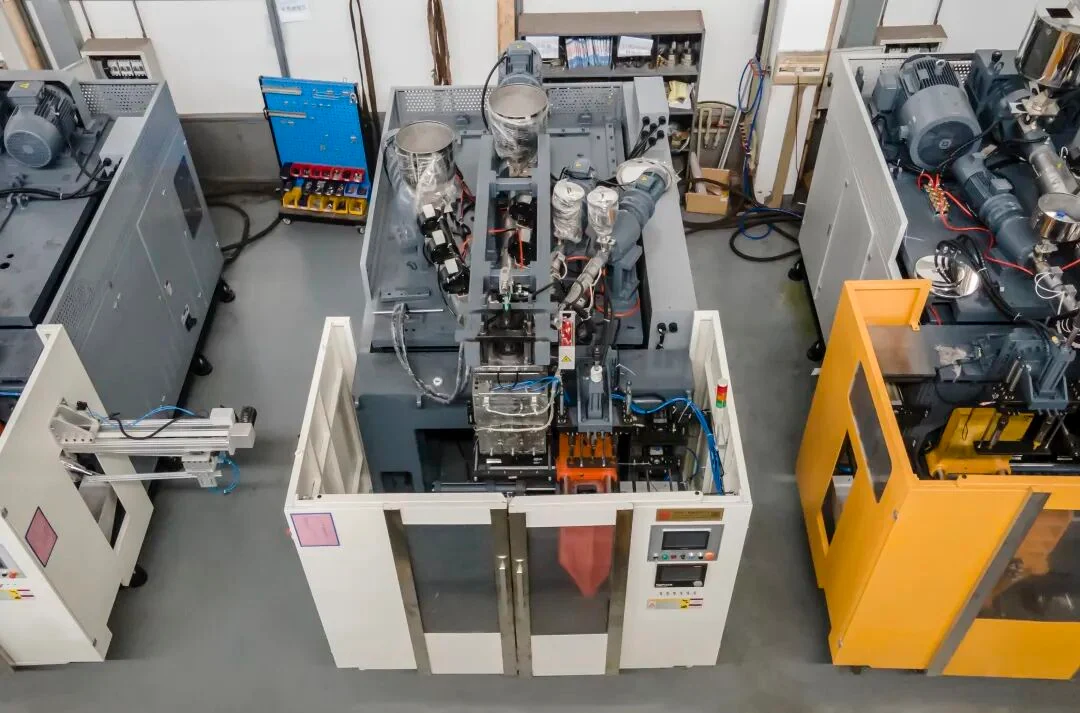
Specify the head, material feeds and mold together
Continuous extrusion supplies the parison while machine motions and tooling coordinate capture, forming and removal. Cavity count, die spacing and melt output must suit the mold and required product. Increasing head count without checking the complete system is not a reliable output plan.
| Configuration area | Decision to document |
|---|---|
| Head and feeds | Cavity layout, material outputs, layers and resin grades |
| Mold and clamp | Envelope, opening, support and the intended product |
| Blow-pin system | Neck direction, access and forming interface |
| Downstream line | Trimming, labeling, inspection and part handling |
For multilayer operation, request the material-flow drawing as well as the nominal layer count. For single-layer production, define any color, view-stripe or material-reuse requirement separately. Confirm the exact supplied equipment on the quotation.
Match blowing and trimming to the neck design
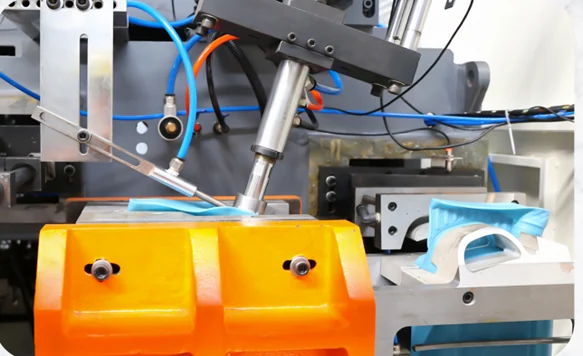
Some bottles use a vertical neck; others require an angled neck or a different presentation during forming. Tongda’s HTS source material shows a rotary blow-pin arrangement intended to address neck-orientation requirements. Its suitability still needs to be checked against the actual neck, mold and motion sequence.
Trimming options described in the platform material include push-through deflashing and rotary cutting arrangements. Select the method by the neck finish, flash geometry, part support and downstream duty. A trimming method should demonstrate the required edge and sealing surface on the actual product.
Avoid treating an automation interface as a complete installed function. Identify the handling equipment, controls and guarding included, and define the condition of the part at each transfer.

Make changeover a measurable operation
List the items that change with the product: forming mold, extrusion tooling where needed, blow pins, trimming fixtures, material recipe and downstream settings. Record the sequence for stopping, changing, checking and restarting production using the supplier’s approved procedures.
Measure changeover from the agreed starting condition to stable accepted production. A short mechanical mold change is not the same as a complete changeover that includes material transition and quality release. Record transition waste and any adjustment required before the approved part is produced.
For plants retaining older tooling, use the separate mold-reuse upgrade guide. A configurable platform and a compatible existing mold are related possibilities, but each needs its own interface review.
Demonstrate the complete production requirement
Agree a run using the specified resin, mold, product mass and inspection requirements. Count accepted parts and document stops, rejects and downstream constraints. Check weight distribution, local walls, neck finish and trimming results across the run.
Test the representative products that establish the promised operating range. Retain recipes and the setup information needed to reproduce the result. Brand names on a control cabinet or a large list of stored recipes do not by themselves demonstrate a successful product changeover.
Questions buyers ask
Can one HTS machine cover the full platform size range?
Not automatically. The quoted model and configuration have specific tooling, material and motion limits. Define the intended products and have their compatibility confirmed individually.
Does modular design mean future automation can be added without engineering?
No. Future equipment still needs suitable space, part presentation, controls and safety integration. State expansion requirements at the beginning so the relevant interfaces can be included.
Which information should I send to configure an HTS line?
Provide product drawings, resin, neck details, expected production mix and target accepted output. Review the HTS II-8L model and chemical bottle applications, then request a product-family assessment with those inputs.
Source material: Tongda WeChat article 07. Source photographs and video stills retain the original equipment details. English concept illustrations are identified in their captions.